
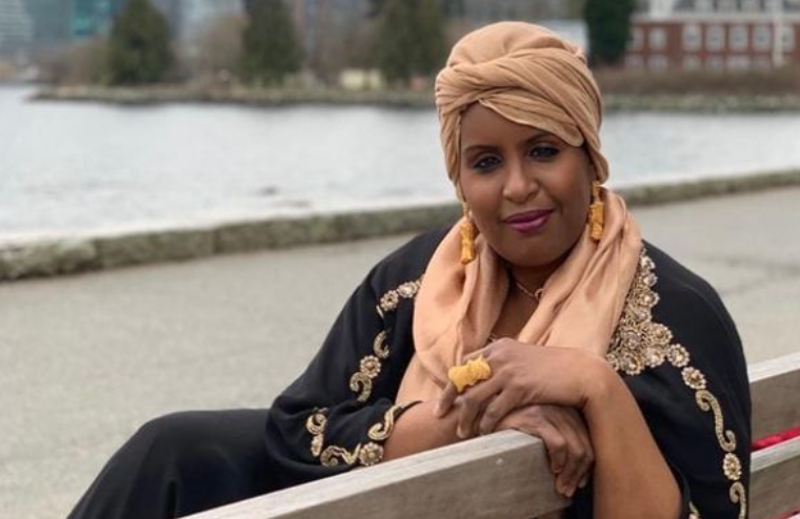
At just six years old, Hibo Wardere experienced a pain so severe that death felt like a better option.
“You can’t even breathe and then before you even start to think ‘what’s happening,’ it’s more cutting and more cutting and more cutting”.
“By the end of it, you just want to die,” she said in an interview with MyLondon.
“I was the person that was being butchered, a child that was being butchered, and a child who saw everything: flesh on the floor, her blood everywhere.
“It was a nightmare.”
Female genital mutilation (FGM) is a procedure where the genitals are deliberately cut, injured or changed for cultural or religious reasons.
In Somalia, where Hibo’s family is from, 98% of women and girls aged 15 to 49 have undergone FGM, according to UNICEF, which is the highest prevalence of any country in the world.
Hibo, from Waltham, East London, explained that the procedure is designed to remove a woman’s sexual urges, “protecting your virginity” before marriage.
There is no medical reason for the procedure.
For Hibo, trusting her family was impossible after she was subjected to the most pervasive form of FGM – infibulation.
This involves full removal of the clitoris and labia then the vagina is sealed, leaving only a small opening for urination.
“When the cutting happened, it just spiralled me to a different world where there’s a lot of people around you that love you, taking care of you but you can’t see them because you see pain,” she said.
“Then you just can’t trust them, the trust is so damaged”.
“Even when they call your name, you feel like something bad is going to happen to you”.
To add to the sense of betrayal, there was an elaborate family celebration before the mutilation, during which she remembers being confused.
She said: “You’re swept off by this amazing party and you’ve got no idea what you’ve done to be honoured for anything like that”.
“I was just a little girl loving these dresses that are very colourful and they were all mine but it wasn’t my birthday”.
“When the day itself comes, that’s when you find out what all the celebrations were for”.
“It’s not a day that any girl in the world, on Earth, in the universe, should ever, ever, experience”.
Hibo added: “The minute they pulled my dress up, and my legs were yanked apart, I knew this is wrong”.
“This is wrong. Nobody should be touching any child’s genitals and I just felt something horrific is about to take place”.
“Otherwise, why would they yank my legs apart so hard?”
To add to the ordeal, it is common practice for the groom to forcefully consummate the marriage and for their families to check whether the bride’s virginity is intact.
“It’s a humiliating thing to do to a girl who you’ve already scarred when she was a child, and now you’re going to scar her again because people are going to come and check that she was a virgin,” she said.
Hibo fled Somalia in 1989, when she was just 18 years old as a refugee from the civil war.
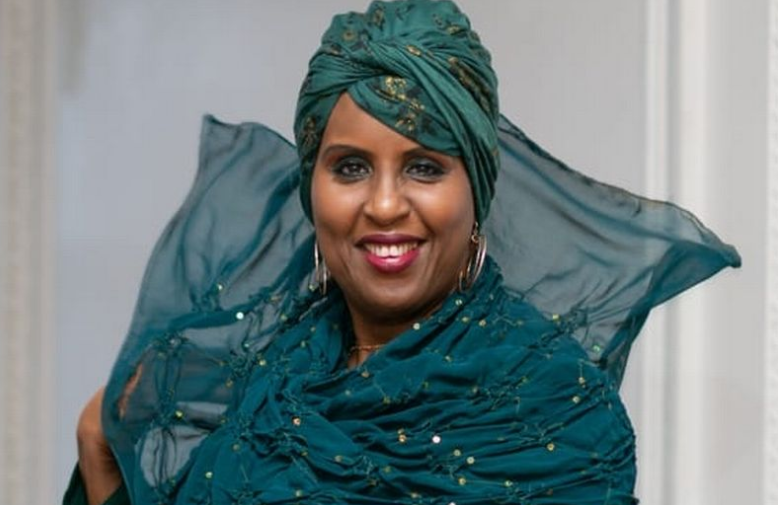
Arriving in London, Hibo sought medical help despite being unable to speak English, simply gesturing to the area which had caused her a lifetime of pain.
She said: “I have so much to be grateful for”.
“I am today what I am because the UK granted me that”.
“So for me, I’m the lucky one who escaped”.
She called this her “freedom act” and at 18, her life began.
When the eldest of her seven children reached primary school age, Hibo was forced to confront her childhood trauma head-on.
As a volunteer teaching assistant, she was assigned to help a child the school suspected may have experienced FGM.
She credits that child for sparking her recovery:
“It made me look deeply into myself and write about my own experience,” she said.
Hibo was given the chance to speak about her ordeal and, from there, she has built a career as a campaigner against FGM.
She travels across the UK speaking about her experiences, educating school children, universities and institutions on the subject, and she has written a book, Cut, which is now being made into a film.

Hibo was also part of the consultation team on the 2016 UK law changes surrounding FGM and has devoted her life to the cause.
“My ultimate goal is to know that no girl on Earth grows up having this on her head”.
“I don’t want to see a future Hibo”.
“I want to see future heroes who are amazing, free of this pain, you know, living their life achieving aspirations”.
Source: My London