
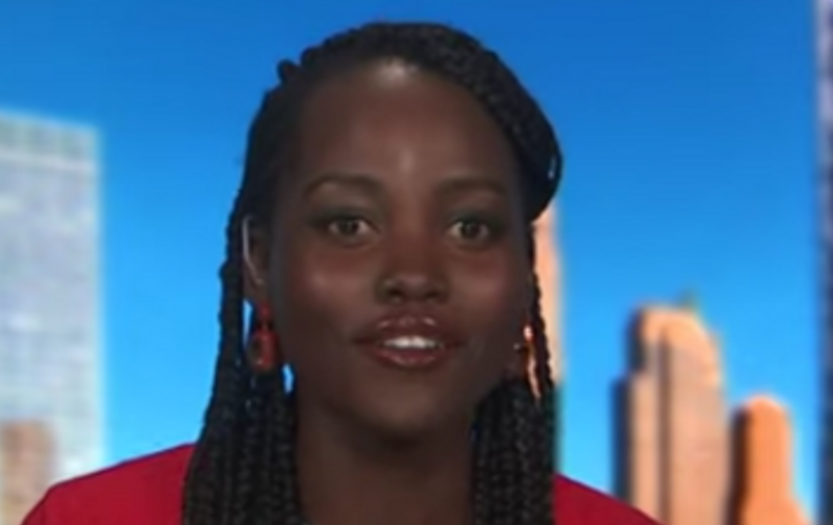
The Oscar-winning actress told BBC Newsnight that colourism “is the daughter of racism” in “a world that rewards lighter skin over darker skin”.
She was speaking ahead of the release of her children’s book, Sulwe, about a girl with darker skin than her family.
“I definitely grew up feeling uncomfortable with my skin colour because I felt like the world around me awarded lighter skin,” the Black Panther star told Newsnight’s Emily Maitlis.
My younger sister, whose skin was lighter, was called “beautiful” and “pretty”, self-consciously that translates into – ‘I’m not worthy’.”
“We still ascribe to these notions of eurocentric standards of beauty, that then affect how we see ourselves among ourselves”.
Lupita, who won a best supporting actress Oscar for 12 Years a Slave, said colourism was “very much linked to racism” despite the fact she experienced it in a predominantly black society like Kenya.
Nyong’o said she was once told at an audition that she was “too dark” for television.
But Nyong’o said the relationship to her skin had been separate to the relationship to her race.
“Race is a very social construct, one that I didn’t have to ascribe to on a daily basis growing up”.
“As much as I was experiencing colourism in Kenya, I wasn’t aware that I belonged to a race called black.”
That changed when I moved to the US, “because suddenly the term black was being ascribed to me and it meant certain things that I was not accustomed to.”
The 36-year-old actress was born in Mexico and raised in Kenya, before moving to the United States.