
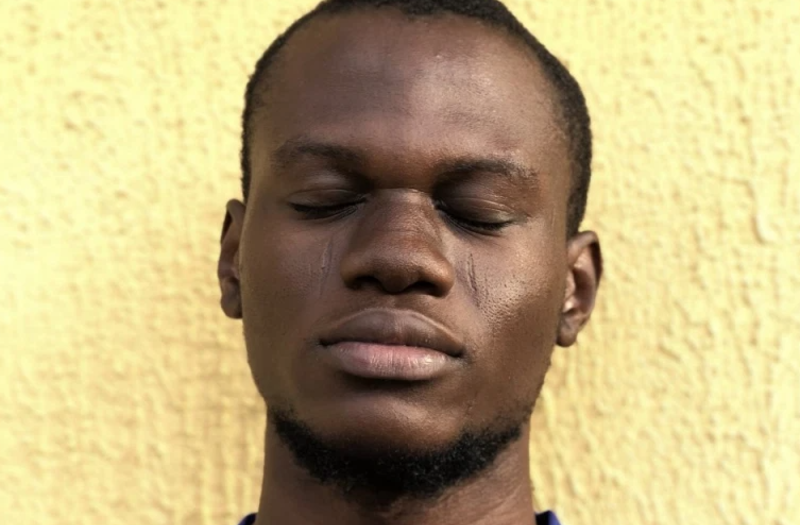
When I was in junior high school, a classmate of mine would constantly tease me around the schoolyard by calling me an ‘ila’.
In Yoruba – the language spoken by the tribe in Western Nigeria where I’m from – it’s a word that means ‘mark’ and this fellow student was referring to the marking on my face.
Everyone in class found his taunts funny but I would always go home and be sad.
It was just one of the many moments that made me feel incredibly self-conscious.

I don’t recall the exact procedures used in inscribing these on my face but it happened to me when I was about three years old.
The practice is a family ritual on my father’s side so all of my siblings got it done.
My father is no longer alive, so I never got to ask him or talk to him about my own procedure.
It’s done by cutting and opening the skin with a sharp object, which is later covered with black soot that eventually turns it into a permanent scar.
For Yorubas, the markings serve as a means of beautification and identification – it’s believed that anyone spotted with them could be immediately distinguished to belong to certain Yoruba family.
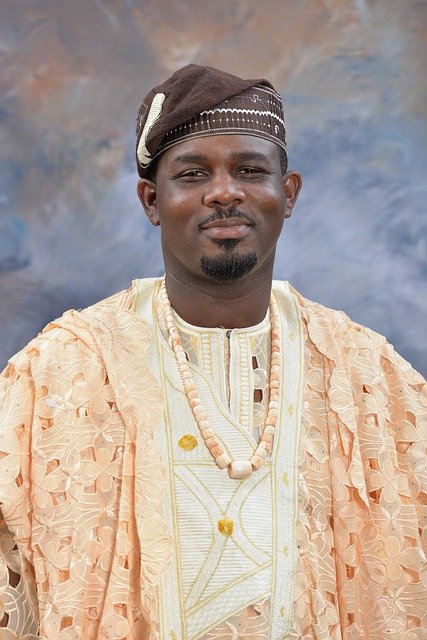
My father had it done, but I don’t recall any of my uncles, aunts or grandparents having it too because I didn’t spend much time with them.
Several of my siblings got theirs at a very young age when we couldn’t decide whether we wanted them or not.
When I was growing up, I most certainly felt like I didn’t want my facial markings because it made me stand out from the crowd.
I don’t remember any of my classmates having them on their face either, which made me feel even more alone.
The bullying didn’t stop with my peers though – a couple of teachers occasionally made jokes regarding them too.
On a number of occasions, they called me ‘number 11’, which is a reference to the two straight lines on each side of my cheeks.
When I was about 12 years old, I also had a boy ask me, ‘Why do you have these markings on your face?’
I recalled not being able to give him a response because at that time I had no idea what to say, I was young, naive, and shy.
All those years of verbal bullying built up to having low self-esteem in high school.
Though I wasn’t being called names anymore, I had anxiety meeting and talking to people because I felt they made me look unattractive.
The few friends I had in high school were quite supportive and never made jokes or negative comments, but I still felt as if I was carrying around a burden.
Even when I had love interests tell me they thought my face was actually attractive, I always just cringed at this acknowledgment of them.
I felt the compliments were maybe just a way to win me over so I never really believed they could be genuine.
My self-esteem got so bad that I didn’t even want to look at myself in the mirror anymore.
So I tried to do something about it to get rid of them.
Last year, when I was around 20 years old, I searched on Google how to remove them, but actually came across someone who was embracing their facial markings.
I was moved by how they shared their story, the challenges they faced growing up, the bullying, and the low self-esteem they encountered.
It made me feel like I wasn’t alone in what I was going through.
So I reached out to them and actually arranged to meet this person face-to-face in January.
The meeting was so therapeutic for me.
We shared the challenges we both faced while growing up and I truly started to feel like I wasn’t alone.
It gave me a sense of connection with them – one I have never had with anybody else like us.
Ever since, I have been on a journey of self-acceptance.
I’m starting to take baby steps, so my fear of taking photographs is slowly wearing off and I’m becoming a bit more confident in meeting people in public places.
Source: Metro