
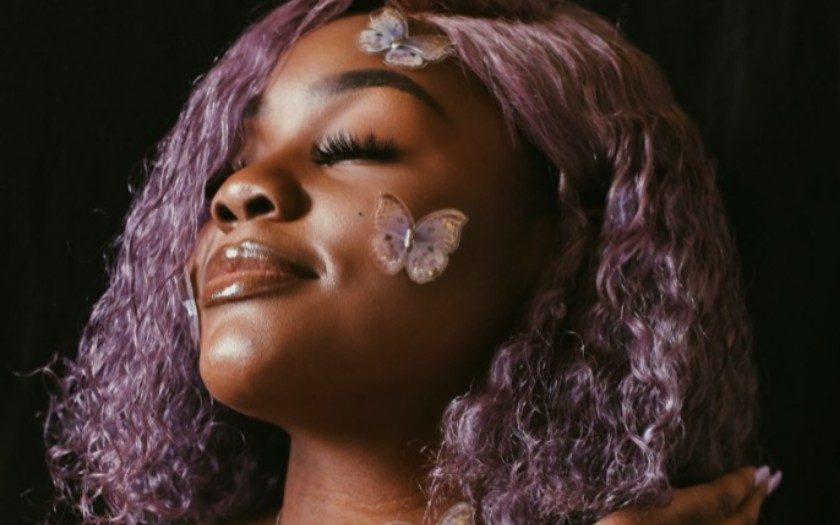
Years of relaxing, sewing in weaves, styling, applying glue to the hairline, braiding and pulling have left a 31-year-old aspiring South African model with a balding head according to a BBC Africa report.
Via BBC Africa,
“Every time I took out my weave at the salon, I would have them chemically ‘relax’ my hair and would then put on another weave on the same day – I was never with my own hair,” says Bandile (not her real name).
It is a form of hair loss called traction alopecia, and she was in secondary school when she first noticed her hair was falling out.
But the Johannesburg resident is not alone – the condition affects one-third of women of African descent, according to a study in the medical journal Clinical, Cosmetic and Investigational Dermatology.
A study three years ago of almost 6,000 women of African descent by Boston University’s Slone Epidemiology Center found that almost 48% of respondents had suffered hair loss on the crown or the top of the head – mostly caused by traction alopecia.
Given the topic tends to be shrouded in silence, the true figure may be higher.
“If we all had to take off our wigs at work, eight out of 10 women would have hair issues.
It’s just something we don’t and won’t talk about. We are very ashamed of it,” says Bandile.
“The doctor told me I’d pulled my hair from the root when I used glue to weave it.
That glue wasn’t removed and it damaged the follicle root of my hair.”
Bandile blames the problem on the widespread belief that braids and plaits promote hair growth.
“The misconceptions we grew up with was that a weave is more manageable than your natural hair.”
And some estimates suggest women across Africa spend an estimated $6bn (£4bn) on weaves, braids and wigs each year.
“Every woman feels more sophisticated with a weave.
Half of us feel like when you’ve got a long weave and long hair, you look a bit more beautiful and you’re accepted better in society,” she says.
“Every black woman I know is obsessed with growing their hair long.
They put thin plaits on the hairline, which pulls it”, she tells BBC Africa.
image/unsplash